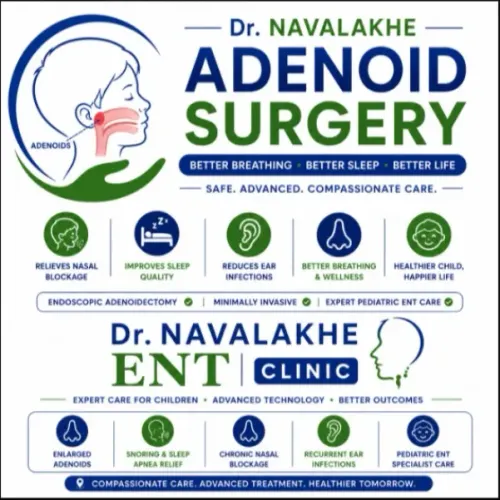
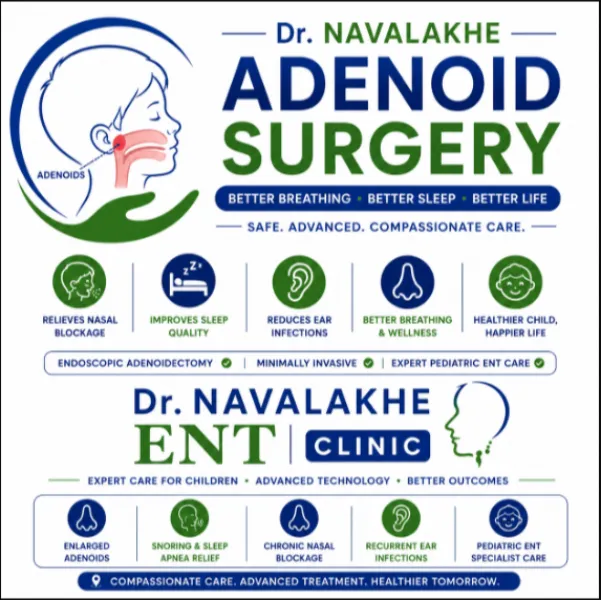
Persistent mouth breathing, nasal blockage and disturbed sleep can sometimes be related to enlarged adenoids. At Dr. Navalakhe ENT Clinic, Dr. Milind Navalakhe evaluates these symptoms before determining whether adenoid surgery is appropriate for a child.
Adenoids are immune tissues located behind the nose, high in the throat. Unlike tonsils, they cannot be seen simply by asking a child to open the mouth. They often enlarge during early childhood and may become less prominent as the child grows.
Signs of enlarged or infected adenoids
Children with problematic adenoids may experience:
- Regular mouth breathing
- Persistent nasal blockage
- Loud or habitual snoring
- Restless sleep
- A blocked or nasal-sounding voice
- Recurrent nasal discharge
- Dry mouth after waking
- Repeated ear infections
- Fluid behind the eardrum
- Temporary hearing difficulty
Not every child with these symptoms needs surgery. Allergies, recurrent viral infections, a nasal foreign body and other conditions can produce similar complaints.
How are the adenoids assessed?
The ENT evaluation begins with the child’s symptom history. Parents may be asked whether the child snores every night, pauses while breathing, sleeps in unusual positions or struggles to breathe through the nose during the day.
Assessment may include:
- Examination of the ears, nose and throat
- Nasal endoscopy when suitable
- Hearing tests
- Impedance audiometry
- Review of allergy symptoms
- Sleep-related assessment
- Imaging in selected cases
The doctor also considers how the problem affects school performance, speech, eating and daytime behaviour.
Adenoid surgery assessment in Dadar
Parents seeking an adenoid surgery assessment in Dadar can prepare by recording short examples of the child’s sleep sounds or breathing pattern. A brief video may help explain symptoms that are not present during the daytime appointment.
It is also useful to carry previous prescriptions, hearing reports and details of recurrent infections. The assessment should identify whether enlarged adenoids are the main problem or part of a broader condition involving the tonsils, ears or nasal passages.
When may adenoidectomy be recommended?
Adenoidectomy may be considered when enlarged or repeatedly infected adenoids contribute to:
- Significant nasal obstruction
- Persistent mouth breathing
- Sleep-disordered breathing
- Recurrent or chronic adenoid infection
- Ongoing middle-ear fluid in selected children
- Recurrent ear problems
- Persistent symptoms despite appropriate medical care
Sometimes adenoid surgery is performed with tonsillectomy when both tissues contribute to airway obstruction. In other cases, it may be combined with an ear procedure if middle-ear fluid and hearing difficulties are present.
What should parents expect after surgery?
Adenoidectomy is generally performed under anaesthesia. After the procedure, a child may temporarily experience nasal stuffiness, mild throat discomfort, bad breath or a change in voice quality. These symptoms usually improve as healing progresses.
Parents should follow instructions concerning:
- Food and fluid intake
- Prescribed medicines
- Rest and return to school
- Nose blowing
- Physical activity
- Follow-up appointments
- Warning signs such as bleeding or breathing difficulty
The child’s breathing and sleep may improve gradually rather than immediately because postoperative swelling can temporarily maintain nasal stuffiness.
Adenoid surgery should be based on a clear diagnosis and meaningful symptoms, not merely the appearance of enlarged tissue. Dr. Milind Navalakhe can explain whether continued observation, medical treatment or surgery is the more appropriate option.
Arrange a paediatric ENT assessment for ongoing mouth breathing, snoring or recurrent ear problems.
Keywords