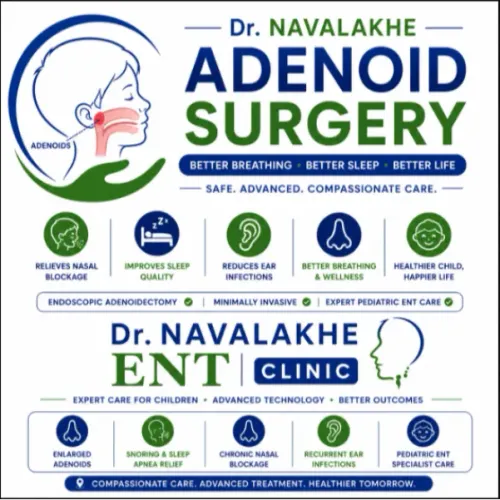
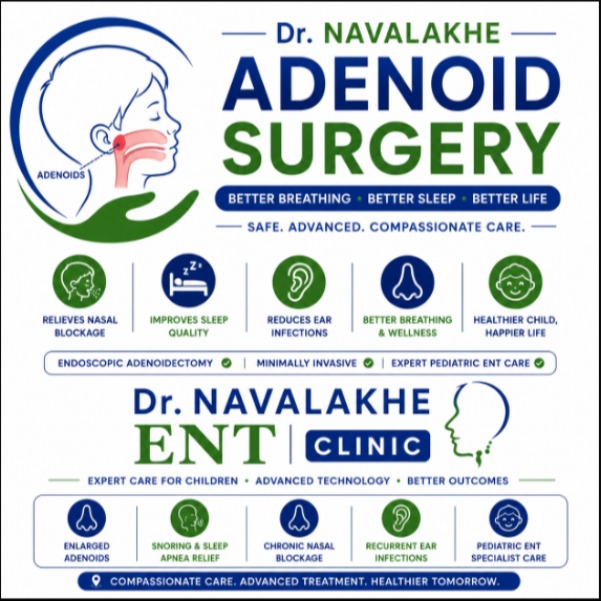
Adenoids are small areas of lymphoid tissue located behind the nose, where they form part of the body's immune system during childhood. They usually become smaller as a child grows. When adenoids become persistently enlarged or inflamed, however, they can contribute to nasal obstruction, mouth breathing, snoring, disturbed sleep, and certain middle-ear problems.
Adenoid surgery, medically called adenoidectomy, involves removing the adenoid tissue. It is not recommended simply because adenoids are present or appear enlarged. The decision generally depends on the child's symptoms, their persistence, associated complications, and findings during ENT evaluation.
Children with enlarged adenoids may breathe through the mouth because airflow through the nose is restricted. Parents may notice regular snoring, a blocked-nose voice, restless sleep, persistent nasal symptoms, or difficulty breathing comfortably through the nose.
Adenoid problems can also affect the ears. The adenoids are located near the openings of the Eustachian tubes, which help ventilate the middle ear. Persistent dysfunction in this region may be associated with middle-ear fluid and hearing difficulties in some children.
Before considering adenoid surgery, an ENT specialist may evaluate:
- Duration and severity of nasal obstruction
- Frequency of infections
- Snoring and sleep-related symptoms
- Mouth breathing
- Ear infections or persistent middle-ear fluid
- Hearing concerns
- Response to appropriate medical treatment
- Examination or endoscopic findings where indicated
Not every child who snores requires surgery. Snoring can have different causes, and the tonsils, nasal passages, allergies, body weight, craniofacial anatomy, and sleep-related breathing pattern may also need consideration.
For families in Mumbai and across Maharashtra, a common concern is whether adenoids will simply shrink with age. They often do, but waiting may not always be appropriate when symptoms are persistent or complications are developing. Conversely, surgery may not be necessary when symptoms are mild and manageable. Individual assessment helps distinguish between these situations.
When adenoidectomy is advised, parents should understand why it is being recommended, whether any additional procedure is being considered, what anaesthesia involves, and what to expect during recovery. Mild throat or nasal discomfort and temporary changes in nasal symptoms can occur following the procedure, and postoperative instructions should be followed carefully.
At Dr. Navalakhe ENT Clinic, children with suspected adenoid-related problems can be assessed based on their symptoms, ear findings, nasal airway, hearing concerns, and clinical history.
The most useful question is not simply whether a child has enlarged adenoids, but whether the adenoids are causing persistent symptoms or complications significant enough to justify further treatment.
Keywords