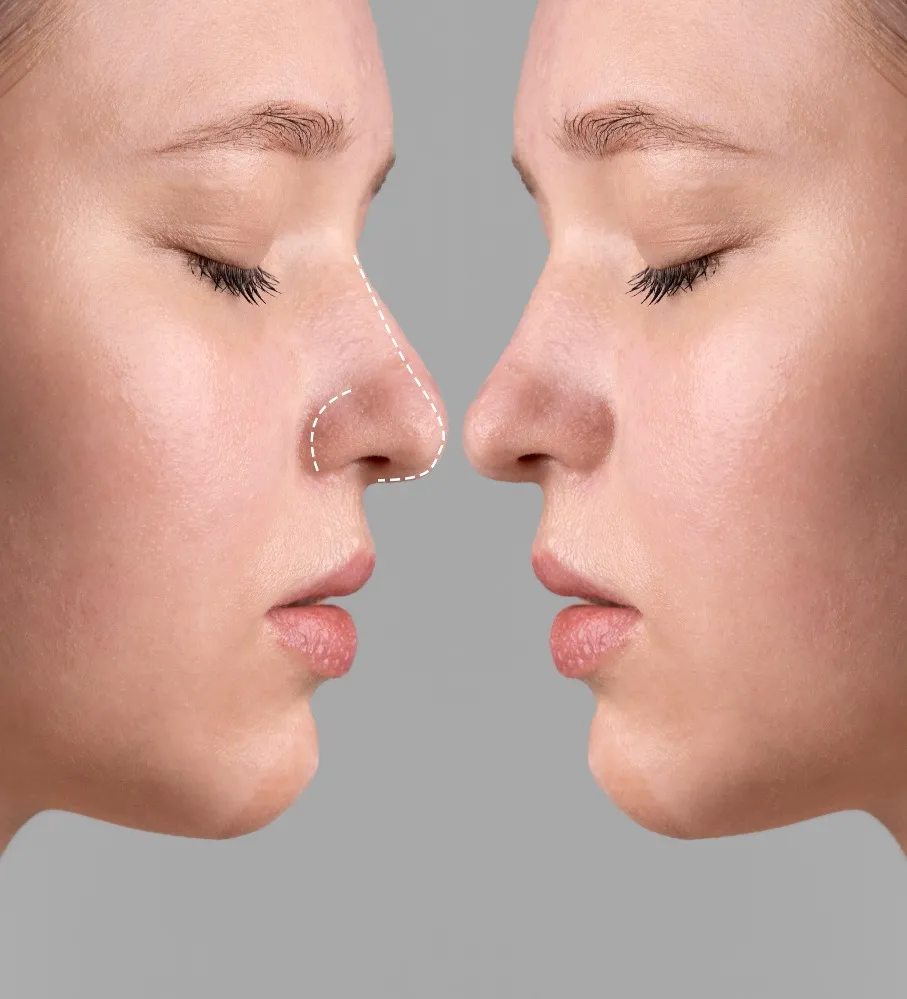
Rhinoplasty can change the shape of the nose, improve facial balance or correct structural problems that affect breathing. At Dr. Navalakhe ENT Clinic, Dr. Milind Navalakhe evaluates both the appearance and functional structure of the nose before determining whether rhinoplasty is suitable.
A successful decision begins with realistic expectations. Cosmetic nose surgery should not be based only on a reference photograph or a particular feature seen on someone else. Every nose has a different skin thickness, cartilage strength, bone structure and relationship with the rest of the face.
Cosmetic and functional rhinoplasty
Cosmetic rhinoplasty focuses on changing features such as:
- A prominent bridge or dorsal hump
- A broad, drooping or poorly defined nasal tip
- Wide nostrils
- Nasal asymmetry
- A nose that appears disproportionate to the face
- Irregularities caused by a previous injury
Functional rhinoplasty addresses structural problems that restrict airflow. It may involve correction of a deviated septum, weak nasal valves or deformity following trauma. Some patients need cosmetic and functional improvements during the same procedure.
What happens during the consultation?
A detailed consultation should include discussion of the patient’s concerns, medical history and desired changes. The surgeon examines the nose from the outside and assesses the internal nasal passages.
The evaluation may cover:
- Skin thickness and quality
- Nasal bone and cartilage structure
- Tip support
- Septal alignment
- Nasal airflow
- Facial proportions
- Previous surgery or injury
- Allergies and chronic nasal symptoms
Clinical photographs may be taken for planning. Image simulations can support communication, but they should not be interpreted as a guaranteed postoperative result.
Selecting rhinoplasty surgery in Mumbai
Patients considering rhinoplasty surgery in Mumbai should look beyond before-and-after pictures. The surgeon’s understanding of nasal function is important because reducing or reshaping the nose without protecting internal support can affect breathing.
Useful questions to ask include:
- Is the surgery cosmetic, functional or a combination of both?
- Which changes are realistically achievable?
- Will the procedure affect nasal breathing?
- Is an open or closed surgical approach being considered?
- What type of anaesthesia may be used?
- How long will swelling and bruising last?
- What restrictions apply during recovery?
- When can the final shape be assessed?
Clear answers help patients understand both the possibilities and limitations of surgery.
Recovery and realistic expectations
A nasal splint may be used during the initial healing period. Bruising around the eyes and facial swelling can occur, although the extent varies. Most visible swelling improves gradually, but subtle changes—especially around the nasal tip—can continue for several months.
Patients generally need to avoid pressure on the nose, strenuous exercise and accidental impact during early recovery. Glasses may also require special handling if the nasal bones have been repositioned.
Rhinoplasty aims for improvement rather than mathematical perfection. Minor natural asymmetries may remain, and the final result depends partly on individual healing.
People considering surgery should be in good general health, have stable expectations and be prepared to follow postoperative instructions. Smoking, uncontrolled medical conditions and unrealistic goals may affect suitability.
A structured consultation with Dr. Milind Navalakhe can clarify whether rhinoplasty can address the patient’s cosmetic concerns, functional symptoms or both.
Schedule an assessment to discuss your nasal concerns and treatment suitability.
Keywords