Hearing aids and cochlear implants both support people with hearing loss, but they work in fundamentally different ways. Dr. Navalakhe ENT Clinic assesses the type and severity of hearing loss before discussing which option may be appropriate. The choice cannot be made only according to age, device size or the desire for louder sound.
A hearing aid usually amplifies sound so that the remaining hearing system can use it. A cochlear implant bypasses damaged sensory structures in the inner ear and directly stimulates the auditory nerve through electrical signals.
When are hearing aids generally considered?
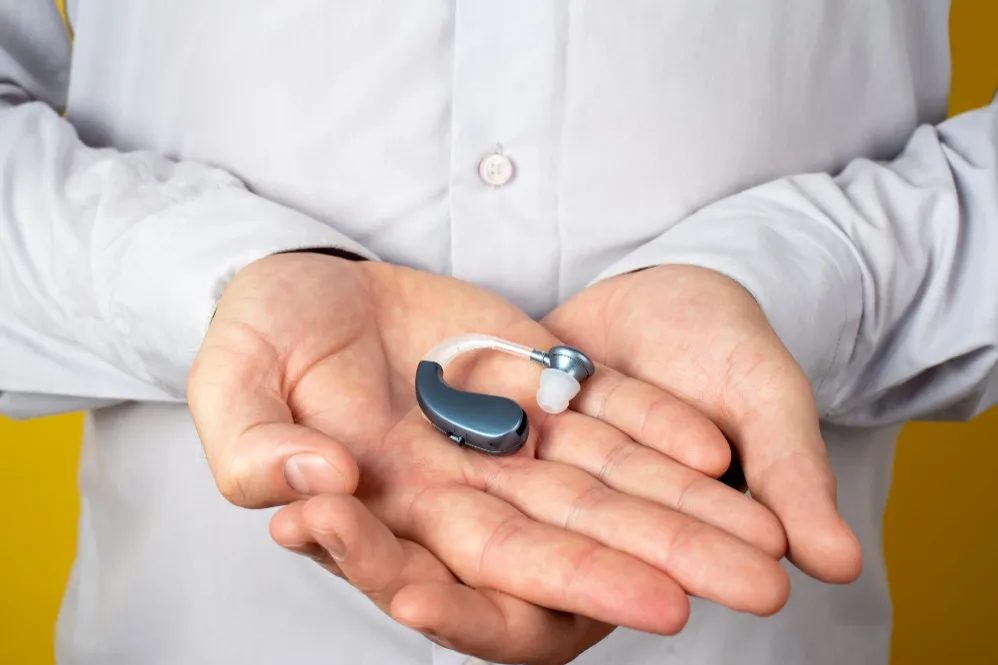
Hearing aids may benefit people with usable residual hearing who can gain access to speech through appropriately programmed amplification. They are available in behind-the-ear, receiver-in-canal and in-the-ear styles.
Their effectiveness depends on factors such as:
- Type and degree of hearing loss
- Ability to understand speech
- Accuracy of programming
- Consistent daily use
- Ear health
- Listening environment
- Follow-up adjustments
Hearing aids are non-surgical and can be reprogrammed as hearing needs change. However, simply making sound louder may provide limited benefit when inner-ear damage is severe and speech remains unclear.
When may a cochlear implant be evaluated?
Cochlear implant evaluation may be considered for children or adults with severe to profound sensorineural hearing loss who receive limited benefit from suitable hearing aids.
The assessment usually examines:
- Detailed audiometry results
- Speech perception with hearing aids
- Hearing-aid usage history
- Structure of the inner ear
- Condition of the auditory nerve
- General medical fitness
- Communication goals
- Readiness for rehabilitation
Eligibility is based on the complete clinical picture. Two people with similar audiograms may have different speech understanding, hearing histories and rehabilitation needs.
Cochlear implant evaluation in Mumbai
Patients considering cochlear implant surgery in Mumbai generally undergo several stages of assessment. These may include ENT examination, advanced hearing tests, hearing-aid trials, imaging and counselling.
The implant has an internal component placed surgically and an external sound processor worn near the ear. After healing, the processor is activated and programmed through a process commonly called mapping.
The person does not immediately experience natural hearing when the device is switched on. The brain must learn to interpret the new electrical sound signals. This makes regular mapping and auditory rehabilitation essential parts of the overall treatment.
Important differences to understand
The main distinctions include:
- Hearing aids amplify acoustic sound; implants convert sound into electrical stimulation.
- Hearing aids do not require surgery; cochlear implants include a surgical procedure.
- Hearing aids may suit mild to severe loss; implants are generally evaluated for more significant loss with limited hearing-aid benefit.
- Hearing aids require fitting and adjustment; implants require surgery, activation, mapping and rehabilitation.
- Neither option guarantees identical outcomes for every user.
For children, the duration of hearing loss, age at intervention, consistent device use and family participation can influence progress. Adults may also require structured listening practice, particularly when hearing loss has been present for many years.
Dr. Milind Navalakhe can guide patients through the medical evaluation and explain whether further cochlear implant assessment is appropriate. The goal is not to choose the most advanced device, but to identify the option that offers the most meaningful access to speech for the individual.
Keywords