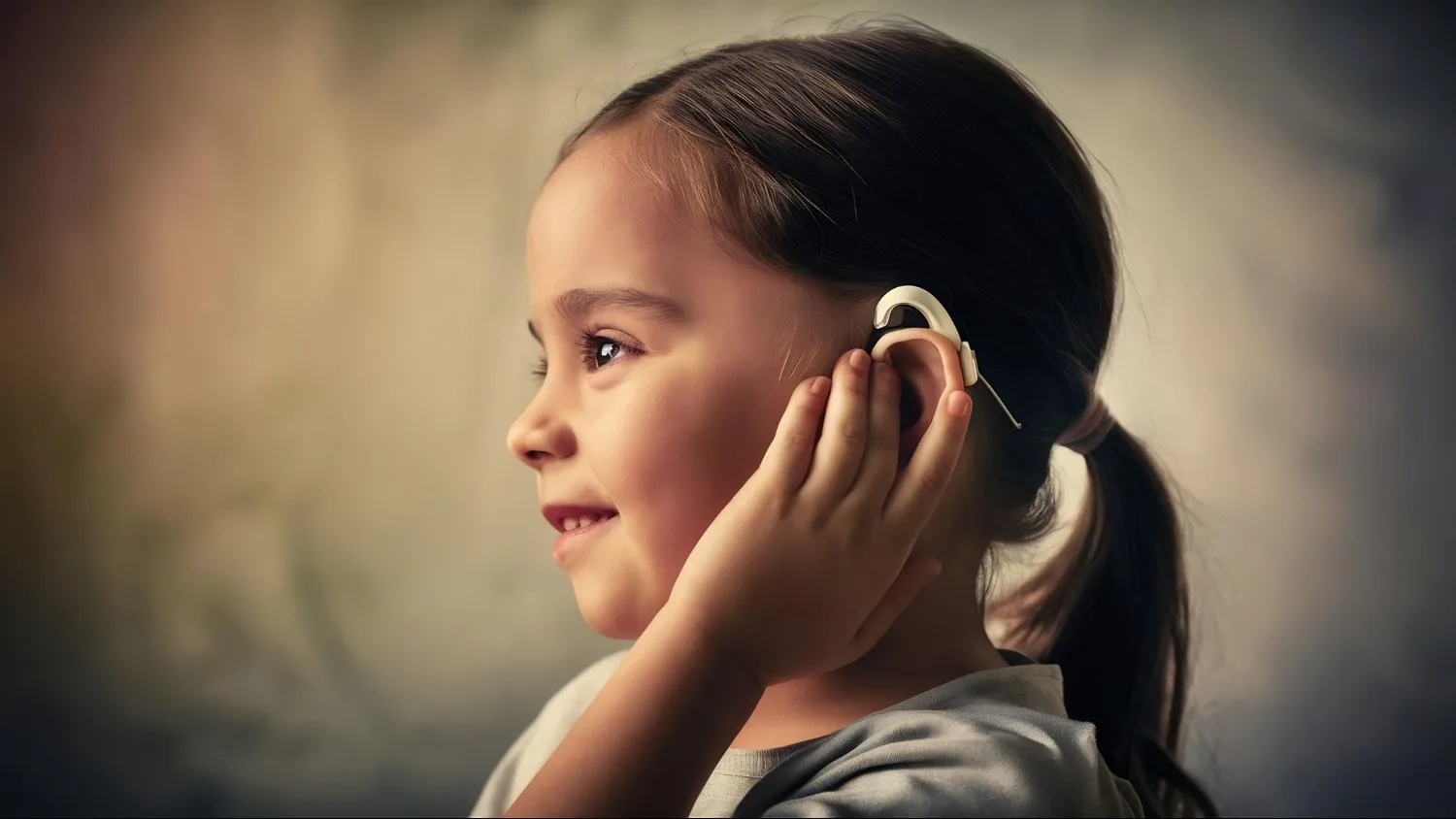
Deafness in children does not always present as complete inability to hear. A child may have mild, moderate, severe, temporary, fluctuating, or permanent hearing loss, and the signs can easily be mistaken for inattention, delayed speech, behavioural differences, or difficulty following instructions.
Hearing plays an important role in speech, language development, communication, classroom participation, and social interaction. This is why recognising possible hearing difficulty early can make a meaningful difference to further assessment and support.
Parents should pay attention when an infant does not consistently respond to sounds or voices. As children grow, other signs may become more noticeable. These can include delayed speech, unclear pronunciation, unusually loud television volume, frequent requests for repetition, turning one ear toward a speaker, or difficulty understanding conversation in noisy surroundings.
School-age children may appear distracted in class or perform inconsistently because they have not heard instructions clearly.
Hearing loss in childhood can have many causes. Some are temporary and treatable, while others require longer-term hearing management. Possible causes include:
- Middle-ear fluid
- Recurrent ear infections
- Congenital hearing loss
- Genetic factors
- Certain infections
- Structural ear abnormalities
- Damage involving the inner ear
- Exposure to excessive noise
- Some medicines that can affect hearing
A child's hearing evaluation should be selected according to age and developmental ability. Tests may include otoacoustic emissions, impedance audiometry, behavioural hearing assessments, pure-tone audiometry, or auditory brainstem response testing, depending on the clinical situation.
In Mumbai, Maharashtra, children may undergo hearing assessment after newborn screening, when parents notice developmental concerns, following repeated ear infections, or when teachers identify possible classroom listening difficulties. Passing an earlier screening test does not necessarily rule out hearing problems that develop later, making ongoing observation important.
An ENT examination can also help identify conditions such as wax blockage, middle-ear fluid, eardrum abnormalities, or enlarged adenoids that may contribute to hearing-related symptoms.
Dr. Navalakhe ENT Clinic provides clinical assessment for children with suspected ear and hearing problems and can determine which investigations are appropriate based on the child's history and examination. The purpose of evaluation is to identify the type and possible cause of hearing difficulty so that suitable management can be considered.
Parents do not need to wait until speech delay becomes pronounced before discussing hearing concerns. If a child repeatedly fails to respond to sound, experiences frequent ear problems, struggles to understand speech, or shows an unexplained delay in communication, an age-appropriate hearing evaluation can provide valuable information.
Keywords