
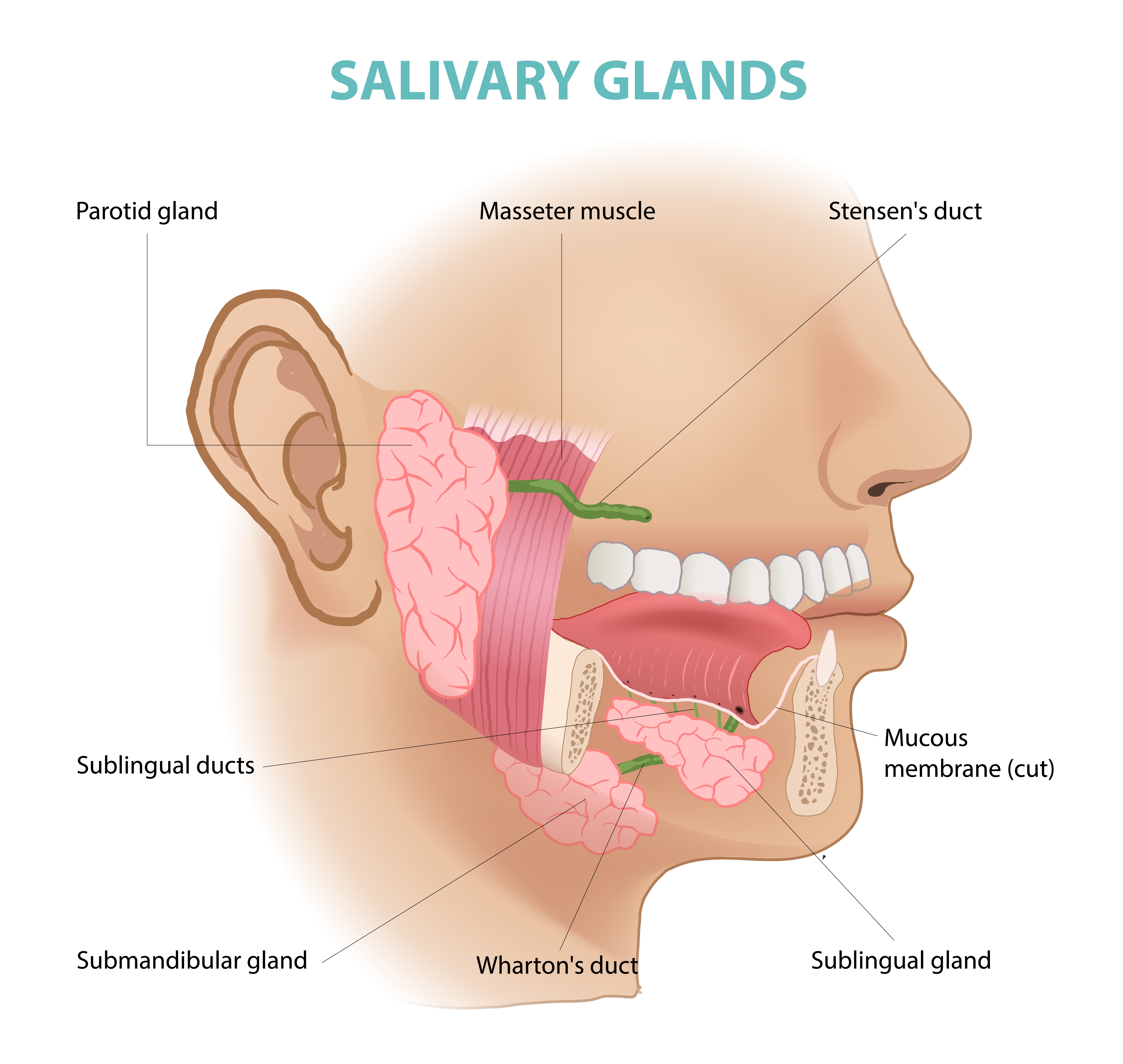
Salivary gland problems can range from stones and recurrent infections to cysts and tumours. While many conditions can initially be evaluated or managed without an operation, salivary gland surgery may be considered when the underlying problem cannot be adequately managed through conservative or minimally invasive approaches.
The major salivary glands include the parotid glands in front of and below the ears, the submandibular glands beneath the jaw, and the sublingual glands under the tongue. Numerous smaller salivary glands are also distributed through the mouth and throat.
One of the most important steps before discussing surgery is establishing what is causing the swelling or discomfort. A lump near the jaw or ear does not automatically mean that surgery is necessary.
Assessment may involve clinical examination and imaging such as ultrasound, CT, or MRI when appropriate. Needle sampling may also be recommended for certain masses. The choice of investigation depends on the location and characteristics of the problem.
Salivary gland surgery may be considered for conditions including:
- Certain benign or malignant tumours
- Persistent or recurrent gland infections
- Salivary stones that cannot be managed by simpler techniques
- Selected cysts or structural abnormalities
- Chronically diseased glands causing significant symptoms
Treatment differs considerably according to the affected gland. Surgery involving the parotid gland requires particular attention because branches of the facial nerve pass through the gland. Submandibular gland surgery involves a different anatomical region with nearby nerves and blood vessels.
Patients evaluating salivary gland surgery in Mumbai should therefore ask what diagnosis has been established, which gland is affected, whether the entire gland or only part of it needs treatment, and whether minimally invasive alternatives are appropriate.
Sialendoscopy, for example, can sometimes be used for obstructive salivary gland conditions and may allow treatment without conventional gland-removal surgery. It is not suitable for every salivary gland problem, so determining the cause first remains essential.
Dr. Navalakhe ENT Clinic assesses salivary gland conditions in Mumbai, Maharashtra, with treatment planning based on examination, investigations, symptoms, and the specific gland involved. When surgery is being considered, discussion should include expected benefits, relevant risks, anaesthesia, recovery, pathology evaluation where applicable, and follow-up.
Persistent swelling, a growing lump, recurrent pain during meals, repeated infections, or unexplained salivary gland symptoms deserve proper evaluation rather than repeated self-treatment.
The appropriate treatment may range from observation and medical management to endoscopic intervention or surgery. A diagnosis-led approach helps ensure that the chosen procedure matches the actual salivary gland condition.
Keywords