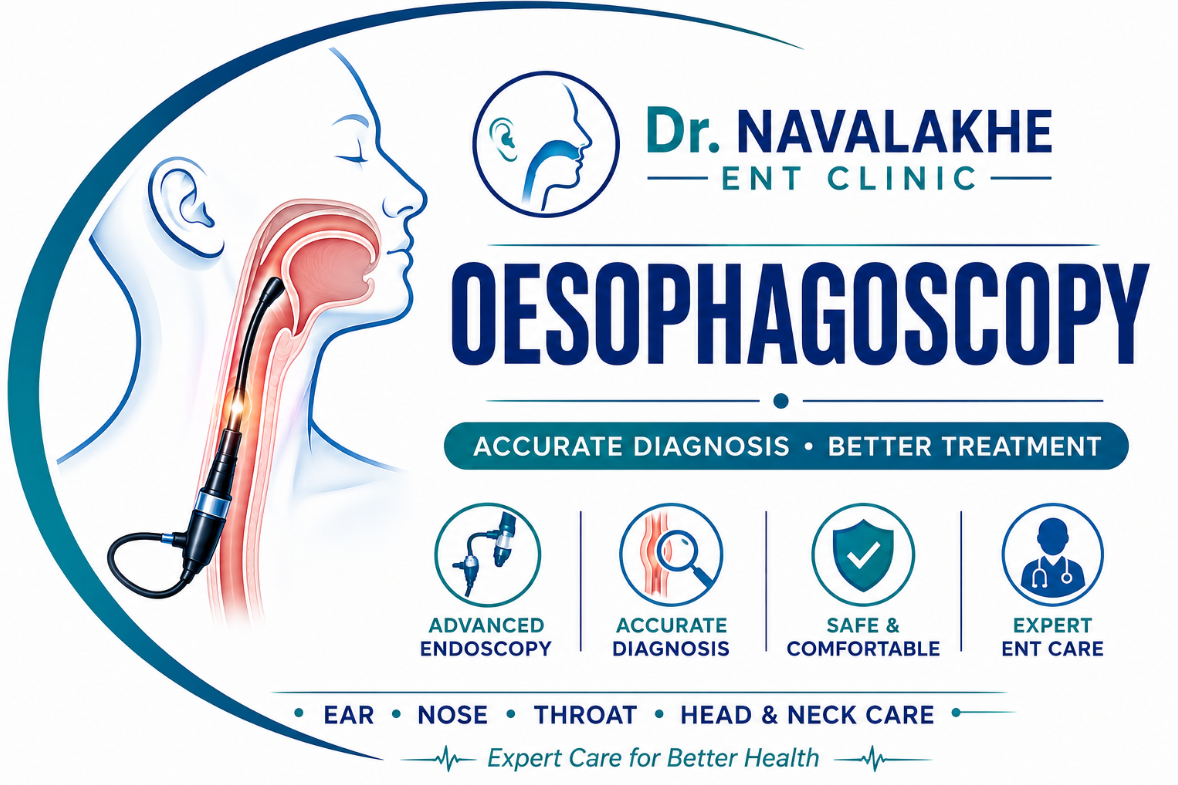
Difficulty swallowing, persistent throat discomfort, or the sensation that something is stuck after eating can require more than a routine examination of the mouth and throat. In selected situations, an ENT specialist may recommend oesophagoscopy to directly examine the oesophagus.
The oesophagus is the muscular tube that carries food and liquids from the throat to the stomach. Oesophagoscopy uses an instrument called an oesophagoscope to visualise its inner passage. Depending on the clinical situation, different endoscopic techniques may be used.
One reason for performing oesophagoscopy is suspected foreign-body impaction. Fish bones, meat boluses, dentures, coins, and other objects can occasionally become lodged in the food passage. Children may accidentally swallow small objects, while adults with underlying narrowing or swallowing disorders can sometimes experience food impaction.
Symptoms that may require assessment include painful swallowing, inability to swallow normally, drooling, chest or throat discomfort, or a persistent sensation of obstruction.
Oesophagoscopy may also form part of the evaluation of selected patients with:
- Persistent difficulty swallowing
- Pain during swallowing
- Suspected narrowing
- Certain unexplained throat or upper swallowing symptoms
- Foreign bodies in the oesophagus
- Abnormal findings requiring direct visual assessment
The investigation should not be confused with a routine throat examination. Structures visible through the mouth represent only part of the swallowing pathway. Symptoms arising deeper in the oesophagus may require imaging, endoscopy, or evaluation by another relevant specialty depending on the suspected cause.
Patients considering oesophagoscopy in Mumbai should inform their doctor about medicines, previous swallowing problems, medical conditions, allergies, and the circumstances surrounding any suspected swallowed object. When a foreign body is involved, knowing what was swallowed and approximately when it happened can influence management.
Certain swallowed objects are more concerning than others. Button batteries, sharp objects, and objects causing complete obstruction require particularly prompt medical attention because complications can develop.
Dr. Navalakhe ENT Clinic evaluates ENT and upper aerodigestive symptoms to determine when endoscopic assessment may be appropriate. The decision to perform oesophagoscopy depends on the patient's symptoms, examination, imaging where necessary, and the suspected location of the problem.
In a large city such as Mumbai, Maharashtra, swallowing symptoms can easily be delayed because patients initially expect discomfort to settle on its own. Mild transient irritation after eating can indeed improve, but persistent obstruction, inability to swallow saliva, significant pain, breathing difficulty, or a known foreign-body ingestion should not be treated as routine indigestion.
Oesophagoscopy is therefore best understood as a diagnostic and, in selected cases, therapeutic procedure used when direct examination of the oesophagus is clinically justified.
Keywords