Persistent sinusitis can cause nasal blockage, thick discharge, facial pressure, reduced smell and repeated headaches. Dr. Navalakhe ENT Clinic evaluates these symptoms to determine whether they are caused by chronic sinus inflammation, nasal polyps, allergy, structural blockage or another condition.
Most people with sinus symptoms do not require surgery. Medical treatment is usually considered first. Endoscopic sinus surgery may enter the discussion when properly selected treatment does not provide adequate relief or when disease continues to obstruct normal sinus drainage.
What is endoscopic sinus surgery?
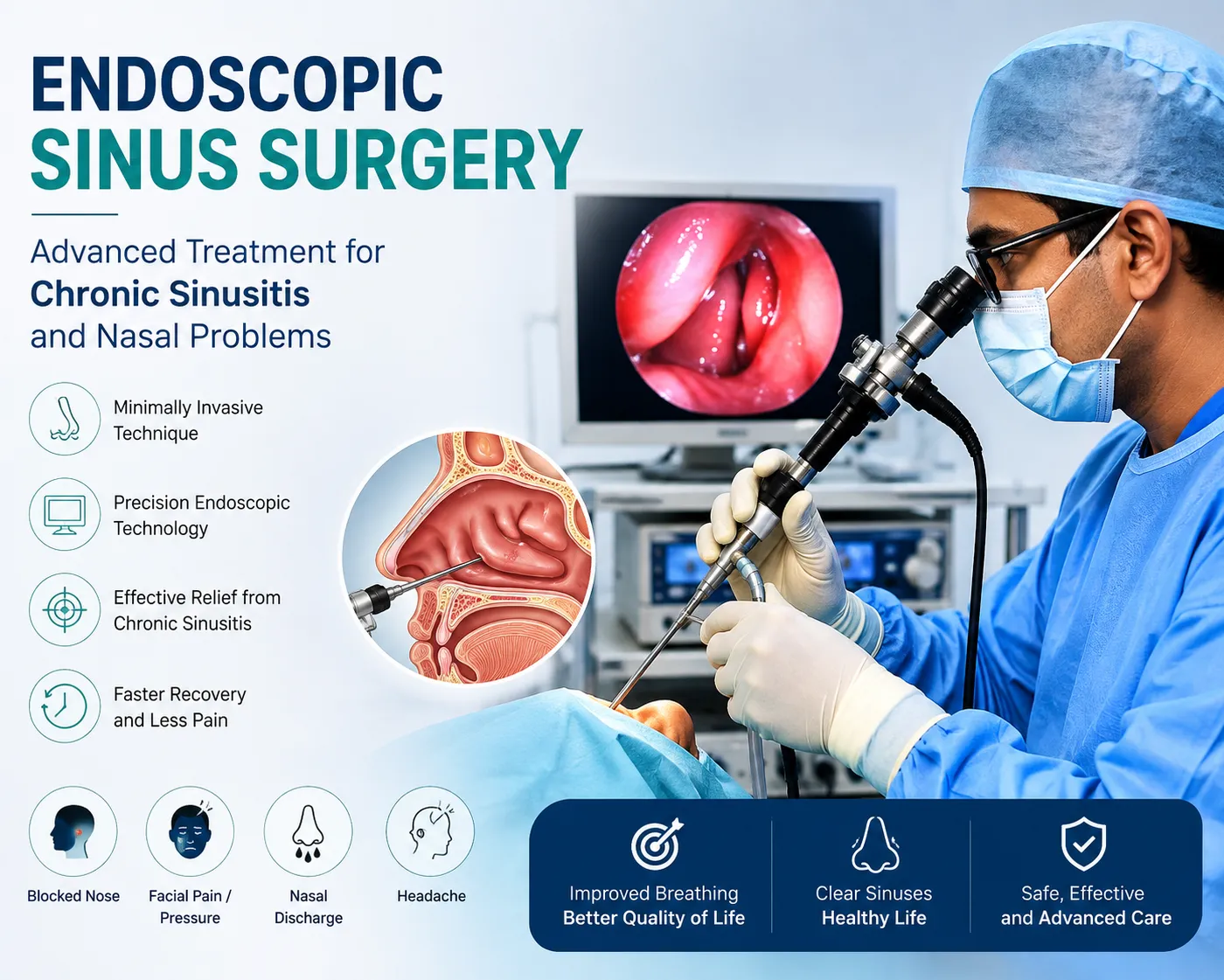
Endoscopic sinus surgery is performed through the nostrils using a narrow camera and specialised instruments. The surgeon can view the nasal passages and sinus openings without making routine external facial cuts.
The objective is usually to remove obstructing tissue and widen the natural sinus drainage pathways. Better ventilation and drainage may also allow nasal medicines to reach the affected areas more effectively after surgery.
The extent of surgery differs from one patient to another. It depends on which sinuses are affected, whether polyps are present and what the examination and imaging show.
When may surgery be considered?
An ENT specialist may discuss surgery in cases involving:
- Chronic sinusitis that persists despite appropriate treatment
- Recurrent sinus infections affecting daily life
- Nasal polyps causing significant obstruction
- Reduced sense of smell associated with persistent disease
- Blocked sinus drainage pathways
- Certain fungal sinus conditions
- Complications related to sinus infection
- Disease requiring tissue examination
Symptoms alone are not enough to decide whether surgery is suitable. A blocked nose can also result from allergy, a deviated nasal septum, enlarged turbinates or medication overuse.
Sinus evaluation for patients in Parel
Patients seeking sinus evaluation in Parel may undergo a detailed symptom review and nasal examination. Nasal endoscopy allows the doctor to inspect areas that cannot be seen through a basic external examination.
A CT scan may be advised when chronic sinus disease is suspected or surgery is being planned. It shows the pattern and extent of sinus involvement and helps the surgeon understand the patient’s anatomy.
Before considering surgery, the medical plan may include:
- Saline nasal rinses
- Prescribed nasal sprays
- Allergy management
- Treatment for infection when indicated
- Control of asthma or related conditions
- Review of environmental triggers
The response to these measures helps determine whether continued medical management or surgery is more reasonable.
What should patients expect after surgery?
Recovery varies according to the extent of the procedure. Temporary nasal congestion, mild blood-stained discharge and facial discomfort may occur during the early healing period.
Postoperative care can include saline irrigation, prescribed medication, activity restrictions and follow-up cleaning of the nasal passages. Patients should follow the surgeon’s instructions rather than restarting old medicines independently.
Surgery improves drainage but does not necessarily remove every underlying tendency toward inflammation. People with allergies, asthma or nasal polyps may still need long-term medical care.
Dr. Milind Navalakhe can assess whether persistent symptoms are suitable for medical treatment, further investigation or endoscopic sinus surgery. A careful decision should be based on the diagnosis, severity of symptoms, CT findings and response to previous treatment—not on the duration of nasal blockage alone.
Keywords