
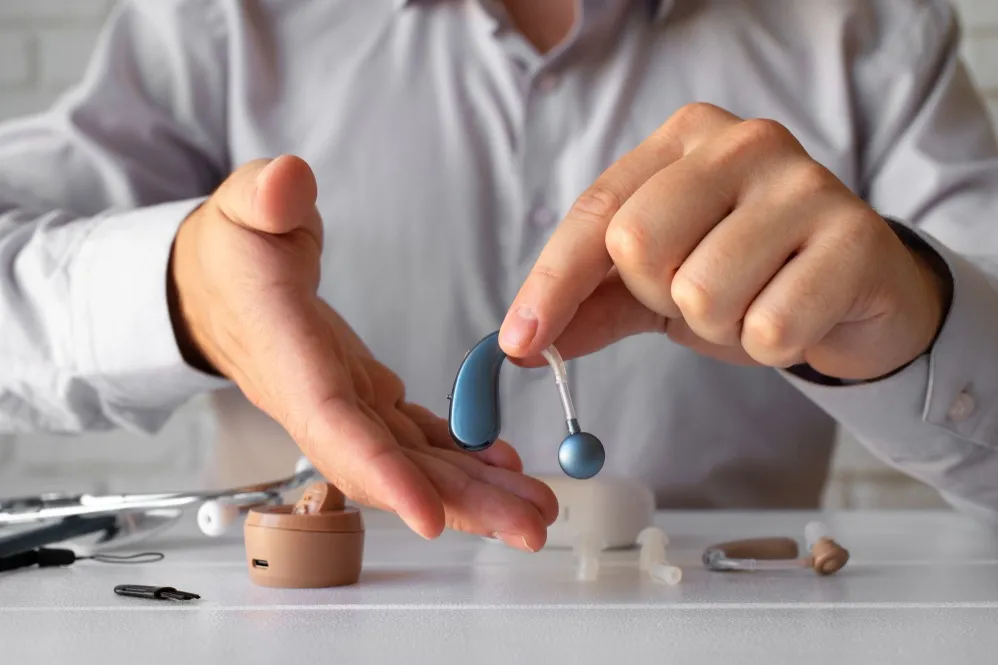
Hearing aids can improve access to speech and surrounding sounds, but they are not simply devices that make everything louder. A suitable hearing aid is selected and programmed according to the person’s hearing pattern, ear health, lifestyle and communication requirements.
For this reason, the process should begin with an ear examination and hearing test rather than choosing a device based only on its appearance, size or price.
How do hearing aids work?
Most modern hearing aids have three main components: a microphone, a digital processor and a receiver. The microphone collects sound, the processor adjusts it according to the programmed settings, and the receiver sends the processed sound into the ear.
Digital hearing aids can be adjusted for different listening situations, including quiet rooms, group conversations, outdoor environments and places with background noise. Depending on the model, features may include rechargeable batteries, directional microphones, smartphone connectivity and direct audio streaming.
Common types of hearing aids
Several styles are available:
- Behind-the-ear hearing aids: The main device rests behind the ear and connects to an earmould or small earpiece.
- Receiver-in-canal hearing aids: The receiver sits inside the ear canal while the processor remains behind the ear.
- In-the-ear hearing aids: The device fits within the visible portion of the ear.
- In-the-canal hearing aids: These smaller devices sit partly or more deeply inside the ear canal.
A smaller device is not automatically the most suitable option. The degree of hearing loss, ear canal size, wax production, finger dexterity, eyesight and battery preferences can all affect the choice.
Why is audiometry needed first?
An audiometry test shows which frequencies are affected and how much amplification may be required. It also helps identify whether the hearing difficulty could be related to a condition needing medical treatment.
Wax blockage, middle-ear fluid, infection or an eardrum problem may need to be managed before amplification is considered. Sudden hearing loss, persistent ear discharge, significant dizziness or hearing loss mainly affecting one ear should receive an ENT evaluation.
At Dr. Navalakhe ENT Clinic, hearing concerns can be assessed together with the patient’s overall ear health. Dr. Milind Navalakhe can evaluate symptoms and help determine whether hearing rehabilitation or another form of management is appropriate.
What happens during hearing aid fitting?
The selected device is programmed according to the audiogram. The user is then shown how to:
- Insert and remove the hearing aid
- Identify right and left devices
- Charge it or replace its battery
- Clean the earpiece safely
- Use available listening programmes
- Manage volume controls
- Protect it from moisture and wax
- Store it correctly when not in use
Follow-up adjustments are often necessary because a laboratory setting cannot reproduce every real-life listening situation.
Adjusting to amplified sound
The brain may need time to become familiar with sounds that have not been heard clearly for months or years. Traffic, utensils, ceiling fans and footsteps may initially seem unusually noticeable.
It can help to begin using the device in quieter surroundings before moving to conversations and busier environments. Keeping notes about sounds that feel too loud or speech that remains unclear can make follow-up programming more productive.
For people in Parel, Dadar, Matunga and other parts of Mumbai, Maharashtra, successful hearing-aid use depends on accurate testing, appropriate selection, careful fitting and regular follow-up. Facing the speaker, improving lighting and reducing background noise can further support clearer everyday communication.
Keywords