Impedance audiometry is a commonly used diagnostic test that helps assess how the middle ear is functioning. Unlike a conventional hearing test, which mainly measures how well a person hears different sounds, impedance testing examines the movement of the eardrum and provides information about pressure, fluid, and related middle-ear conditions.
For patients experiencing blocked-ear sensation, reduced hearing, recurrent ear infections, ear pressure, or suspected middle-ear problems, an ENT specialist may recommend impedance audiometry as part of a broader hearing evaluation. The test is useful for both adults and children and usually requires no active response to sounds from the patient.
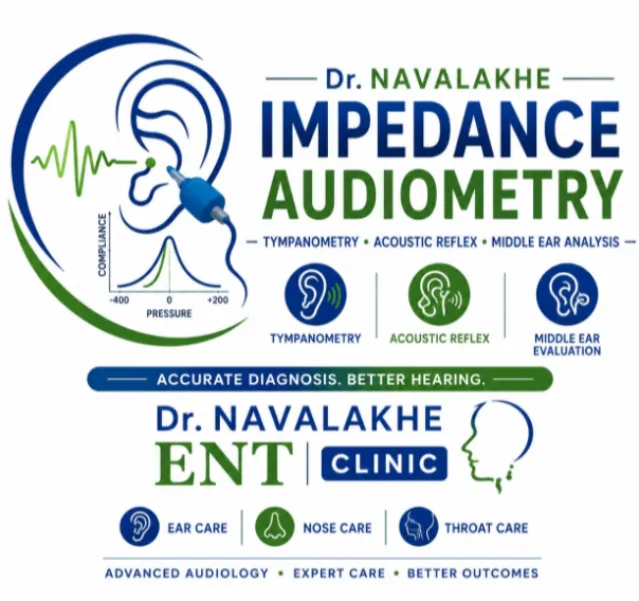
During the assessment, a small probe is gently placed at the entrance of the ear canal. The equipment changes air pressure slightly while measuring how the eardrum responds. Tympanometry, one component of impedance testing, produces a graph known as a tympanogram. Its pattern can help the doctor understand whether the eardrum and middle-ear system are moving normally.
Impedance audiometry may assist in identifying conditions such as:
- Fluid behind the eardrum
- Eustachian tube dysfunction
- Reduced eardrum mobility
- Certain problems involving the middle-ear bones
- Perforation or other abnormalities when interpreted with examination findings
- Middle-ear problems contributing to hearing difficulty
Another component, acoustic reflex testing, measures the response of middle-ear muscles to sound. Depending on the clinical situation, this information may contribute to the overall assessment of the auditory pathway.
Parents in Mumbai, Maharashtra, may encounter this investigation when a child has recurrent ear infections, unclear hearing responses, speech-development concerns, or persistent middle-ear fluid. Because young children may not always provide reliable responses during conventional hearing tests, objective investigations can add useful information. However, no single test establishes the cause of every hearing problem. Results are generally interpreted alongside ENT examination and other age-appropriate hearing assessments.
The test itself is typically brief and does not involve injections or surgical instruments. The patient needs to remain reasonably still while the measurements are taken. Wax blockage or certain active ear conditions may need to be addressed before reliable testing can be completed.
At Dr. Navalakhe ENT Clinic, impedance audiometry can form part of an ENT and hearing evaluation when clinically appropriate. The findings help determine whether symptoms are related to middle-ear function and whether further hearing tests, observation, medical management, or another ENT assessment may be needed.
For people searching for impedance audiometry in Mumbai, the important point is not simply obtaining a test but understanding what its findings mean in the context of symptoms and ear examination. A properly interpreted assessment can help clarify the next step in managing hearing and middle-ear concerns.
Keywords