A recommendation for thyroid surgery often raises questions about safety, voice changes, scarring and recovery. Dr. Navalakhe ENT Clinic provides evaluation for thyroid and neck conditions, with Dr. Milind Navalakhe reviewing the diagnosis, test results and surgical indication before planning treatment.
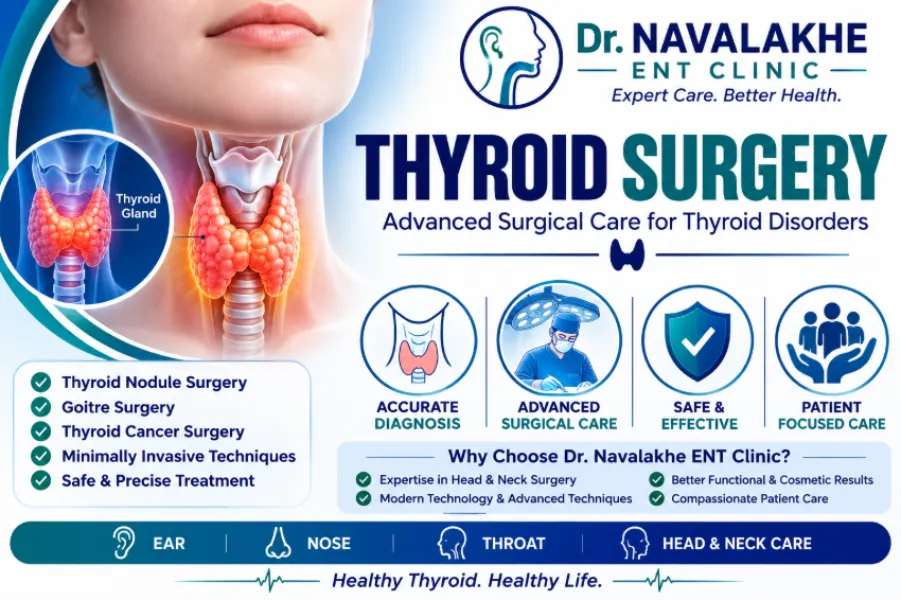
The thyroid is a butterfly-shaped gland located in the lower front of the neck. Surgery may involve removing one lobe, most of the gland or the entire gland, depending on the condition.
Why may thyroid surgery be advised?
Surgery may be considered for:
- A thyroid lump with suspicious test results
- Confirmed or suspected thyroid cancer
- A large goitre causing pressure symptoms
- Difficulty swallowing or breathing
- Progressive thyroid enlargement
- A nodule producing excess thyroid hormone
- Significant cosmetic or structural concerns
- Uncertain findings that require definitive diagnosis
Not every thyroid nodule needs an operation. Many can be monitored with examination, blood tests, ultrasound and needle-based sampling.
What should be reviewed before surgery?
A complete thyroid evaluation may include:
- Thyroid function blood tests
- Neck ultrasound
- Fine-needle aspiration results
- Size and location of the nodule
- Lymph-node findings
- Symptoms of compression
- Previous neck treatment
- Family history
- Current medicines and medical conditions
Patients should bring original reports and imaging wherever possible. Reviewing only a written summary can sometimes leave out details relevant to surgical planning.
Thyroid surgery consultation in Matunga
During a thyroid surgery consultation in Matunga, patients should ask what type of operation is being proposed and why. Removing one thyroid lobe has different long-term implications from removing the whole gland.
Useful questions include:
- Why is surgery recommended in my case?
- Can the condition be monitored instead?
- How much of the thyroid needs to be removed?
- Will I require lifelong thyroid medication?
- How will the voice nerves be protected?
- Could calcium levels be affected?
- How visible is the neck scar likely to be?
- How long will recovery take?
- Will additional treatment be needed after surgery?
A good consultation should provide clear, individual answers rather than general reassurances.
Voice and calcium considerations
The nerves controlling the vocal cords run close to the thyroid gland. Temporary voice changes can occur after surgery because of swelling or irritation, while lasting nerve-related changes are less common but important to discuss.
The parathyroid glands, which help regulate calcium, are also located close to the thyroid. Their function may be temporarily affected, particularly after total thyroid removal. Tingling around the mouth or in the fingers, muscle cramps or unusual weakness after surgery should be reported promptly.
Preparing for recovery
Patients should receive guidance about fasting, medicines, wound care, physical activity and follow-up. Many people return gradually to regular activities, but recovery depends on the extent of surgery and individual health.
The final laboratory examination of the removed tissue provides important diagnostic information. Further decisions may depend on this report. Some patients require thyroid hormone replacement, blood-test monitoring or additional treatment.
Choosing a surgeon involves more than comparing consultation fees or distance. Patients should look for clear communication, careful review of investigations, experience with thyroid and neck anatomy, and a structured follow-up plan.
Schedule a thyroid evaluation to understand whether surgery is required and what approach may suit your condition.
Keywords